

The difference between pharmaceutical and nutraceutical capsules lies in regulation, performance expectations, formulation sensitivity, and supply chain requirements. While both use similar capsule formats, they are designed to solve very different challenges.
This article helps you understand those differences before selecting materials or suppliers.
Pharmaceutical vs Nutraceutical Capsules
Pharmaceutical capsules are developed to meet strict quality, performance, batch-to-batch consistency requirements, within regulated frameworks that govern drug development and manufacturing.
Nutraceutical capsules also require consistent performance and quality standards to support scalable production, while offering greater flexibility in formulation, labeling, and market positioning. Quality requirements and compliance expectations may vary depending on the target market and regulatory framework.
Both require technical expertise, but not the same approach.
What Is the Difference Between Pharmaceutical and Nutraceutical Capsules?
Pharmaceutical products are designed to meet strict regulatory and performance standards for drug delivery, while nutraceutical products emphasize formulation flexibility, dietary compatibility, and clean-label expectations for supplements.
These differences shape how capsules are regulated, tested, and ultimately selected, making regulatory context the starting point for any capsule decision.
1. Regulatory Environment
Pharmaceutical Capsules
In drug manufacturing, capsules are part of a regulated dosage form. They must comply with:
- cGMP regulations
- USP / EP standards
- Full traceability and quality documentation
- Reproducible performance across clinical and commercial stages
Any variability in capsule behavior can affect regulatory approval or product consistency. Depending on the target market, dietary certifications may also be required in addition to regulatory compliance.
Nutraceutical Capsules
In the supplement space, products operate under dietary supplement or food regulations, depending on the market.
- GRAS-compliant raw materials
- Alignment with clean-label trends
- Dietary certifications (vegan, kosher, halal)
- Flexibility across formulations and SKUs
Regulatory compliance remains essential but it is important to mention that nutraceutical products are governed by country-specific frameworks that define ingredient eligibility, labeling standards, and allowable claims.
2. Capsule Selection: Gelatin vs HPMC
Material choice plays a key role when comparing drug-focused products and dietary supplements.
Gelatin Capsules
Common in both pharma and nutraceutical applications due to:
- Excellent machinability
- Predictable disintegration
- Broad compatibility with APIs and actives
In pharmaceutical settings, gelatin is often selected for process reliability and established performance.
HPMC (Vegetarian) Capsules
Frequently used in nutraceutical capsules and select pharmaceutical applications when formulations are:
- Hygroscopic or moisture-sensitive
- Plant-based or allergen-free
- Designed for clean-label positioning
HPMC offers lower moisture content and wider formulation compatibility for sensitive ingredients.
3. Performance Expectations
In Drug Manufacturing
Capsule performance is evaluated based on:
- Dose uniformity
- Consistent disintegration behavior
- Stability throughout shelf life
- Compatibility with high-speed filling equipment
In Supplement Manufacturing
Performance priorities often balance:
- Ingredient protection
- Consumer experience
- Visual appearance
- Compatibility with powders, blends, oils, and complex formulations
- Machinability
4. Customization: Same Options, Different Objectives
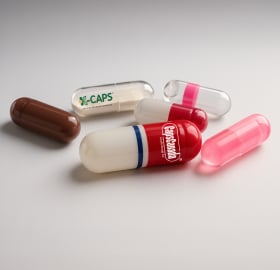
Customization is relevant to both categories. The available options, sizes, colors, printing, and finishes are largely the same, but the rationale for customization varies by application context.
In regulated drug manufacturing, customization is primarily functional. It supports:
- Product identification
- Continuity across development and production stages
- Manufacturing efficiency and process control
Here, customization reinforces consistency and reliability, rather than visual differentiation.
In dietary supplement manufacturing, customization plays a more market-facing role. It often supports:
- Brand recognition
- Clean-label communication
- Visual differentiation on the shelf
In this context, colors, finishes, and capsule printing help reinforce product identity while maintaining the technical performance required for efficient filling and stability.
Lyfe Group Supports Both Pharma and Nutraceutical Manufacturers
Supporting pharmaceutical and nutraceutical manufacturers requires more than a single capsule type; it demands portfolio depth and application-driven flexibility.
We support a wide range of drug and dietary supplement applications through capsule technologies designed to adapt to different formulation challenges, regulatory contexts, and market needs.
- Gelatin capsules made from 100% bovine hide, widely used across regulated and supplement products, and available with Kosher and Halal certifications.
- HPMC (vegetarian) capsules, including options with natural colorants, suitable for clean-label strategies and moisture-sensitive formulations.
- Delayed-release capsules, developed to protect acid-sensitive ingredients and support release beyond the gastric environment.
- Acid-resistant capsules, formulated to withstand stomach conditions and support targeted delivery in the intestinal tract.
- Flavored capsules designed to improve palatability and overall user experience across a range of oral dosage forms
. - TiO₂-free capsule options, aligned with evolving regulatory expectations and clean-label trends.
- Liquid-filled hard capsules, suitable for complex liquid or semi-solid formulations, supported by banding kits to enhance seal integrity.
- Clinical trial capsules, designed to provide flexibility and consistency during early development stages.
- Pet capsules, adapted for veterinary formulations, with sizes and formats adapted to dosing, palatability, and administration requirements in animal health products.
This portfolio approach allows manufacturers to work with a single supplier while adapting capsule solutions across products, regions, and lifecycle stages.
If you are interested in exploring how these solutions can be combined or adapted, discover our full Lyfe Group portfolio.
Customize your Capsule Around the Product
The right capsule depends on regulatory context, formulation behavior, manufacturing needs, and market strategy. Working with an experienced capsule supplier helps ensure those variables are aligned from the start.
If you’re evaluating capsule options for a pharmaceutical or nutraceutical project, contact a Lyfe Group expert to discuss the technical requirements behind your formulation.
CapsCanada is backed by Lyfe Group, a global life sciences organization that supports nutraceutical and pharmaceutical brands through specialized manufacturing, technical expertise, and global supply capabilities.